header 1
header 2
header 3

Our Classmates "In Memory"


Ronald Bonheim of Waterford, MI died June 11th, 2026. See Ronnie's page  to connect with The Dorfman Chapel updates on funeral arrangements and to read and share memories. Tap this live link "In Memory" to do so.  May his memory be a blessing and may he rest in peace


Remembering History Teachers:

Floyd Dain, Walter Goodman, Aaron Gornbein, Harold Stevens and Ralph Weaver 

100 years ago, September 25th, 1926 Henry Ford put in place the  40 hour - 5 day work week. Here's Why We Work 5 Days a Week 

A 40-hour, five-day work week is now standard for full-time jobs in America, but that wasn't true until the 1930s.

Dave Roos

Five days of work and two days of play is how most Americans structure their lives. But the 40-hour, 5-day work week wasn’t enshrined until the passage of the Fair Labor Standards Act in 1938. That law was the culmination of more than a century of American workers fighting for shorter hours, better wages and safer working conditions.

“At the turn of the 20th century, it was not uncommon for most Americans to work 60 or more hours a week,” says Joseph McCartin, a labor historian at Georgetown University.

In 1898, Massachusetts published a “labor bulletin” tracking the wages and hours of domestic workers in the commonwealth. Domestic cooks at the time worked between 78 and 83 hours a week for about 9 cents an hour. They got Sundays off and sometimes a half day on Saturdays. Some factory workers in Massachusetts were slightly better off; according to state law, women and children could only work a maximum of 58 hours a week in textile mills.

The 19th-Century 8-Hour Movement

“In many ways, the idea of limiting working hours and days extends back to the very beginning of the American labor movement,” says Erik Loomis, a labor historian at the University of Rhode Island.

The rallying cry of the 19th-century labor movement was “Eight hours labor, eight hours recreation, eight hours rest,” a phrase first coined by Robert Owen, a Welsh textile manufacturer turned labor reformer.

The 8-hour movement picked up steam after the Civil War when soldiers returned home to rapidly industrializing towns and cities. They were joined by millions of formerly enslaved people fighting for fair wages and humane working conditions.

Chicago was a hotbed of labor activism in the mid-19th century. Chicago workers, exhausted by the typical 12- or 14-hour workday, were some of the first to successfully lobby state representatives to pass an eight-hour limit for Illinois workers in 1867. Unfortunately, the Illinois law had loopholes that allowed employers to negotiate for more hours, which rendered it ineffective.

The next big push came on May 1, 1886, when Chicago unions and political activists called for a nationwide “May Day” strike for the 8-hour day. More than 10,000 people gathered in Chicago for what was supposed to be a peaceful demonstration. Tensions escalated between strikers and police, resulting in the death of four demonstrators. In response, rioters and anarchists took to the streets on May 4, a violent clash that ended with a deadly bombing in Chicago’s Haymarket Square.

The 1886 “Haymarket Affair” was a painful setback for the 8-hour movement, which didn’t fully recover until World War I.

After WWI, Shorter Workdays Prevail

In 1916, as politicians debated entry in World War I, more than 400,000 American railroad workers threatened to strike unless they were given an 8-hour workday. The massive nationwide strike would have crippled America’s industrial production on the eve of war.

When negotiations broke down between the railroads and the striking workers, President Woodrow Wilson and Congress intervened to avert a national crisis. The result was the Adamson Act of 1916, the first federal law mandating an 8-hour workday, if only for a single industry.

When the United States finally entered the war in 1917, the resulting labor shortage gave workers more leverage to demand fewer hours and shorter work weeks.

“In the first six months of America's involvement in the war, more strikes took place in the U.S. than during any previous period in American history,” says McCartin, co-author with Melvyn Dubofsky of Labor in America: A History.

Fearing that strikes would slow the production of essential wartime equipment, President Wilson created the National War Labor Board to intervene in labor disputes and force employers to recognize collective bargaining. The result was a brief “golden age” for American workers during 1917 and 1918, including widespread adoption of the 8-hour day.

When the war ended on November 11, 1918, industrialists tried to roll back the gains made by workers by increasing hours, but they were met with fierce opposition. Emboldened American workers organized 3,000 strikes in 1919 involving more than 4 million laborers.

“Employers realized that the genie had been let out of the bottle during the war and couldn't be entirely stuffed back in,” says McCartin. “They couldn't return to the status quo and try to force workers to work the way they did prior to the war.”

Henry Ford Creates an Industry Standard

In 1913, Henry Ford’s Highland Park Plant became the first to employ the company’s groundbreaking assembly line technology. While the assembly line was able to produce cars radically faster and cheaper than ever before, it was also backbreaking, repetitive work. Just months after opening, workers were quitting at such a fast rate that labor turnover at Highland Park reached 380 percent.

“Ford was dealing with what so many industries dealt with at the time, which was massive turnover,” says Loomis. “These jobs were terrible and nobody wanted to stay at them. He decided to embrace the ideas of scientific management and make a deal with the workforce.”

Ford’s irresistible offer was a $5, 8-hour workday—almost twice the pay for less work than before. As part of the deal, workers at Highland Park had to consent to inspections by the company’s “Sociological Department,” which flagged workers for drinking or reading “radical” (pro-union) material.

As early as 1922, the Ford Motor Company took steps toward the creation of a 40-hour workweek—five 8-hour days and a two-day weekend. “Every man,” saidEdsel Ford, the founder’s son, “needs more than one day a week for rest and recreation.”

The decision was about more than just happy workers, says McCartin. It was part of an economic philosophy later called “Fordism.” Under Fordism, mass production requires mass consumption. Ford wanted his workers to be well-paid and well-rested so they would use their leisure time to buy more things, including his cars.

Ford officially adopted a five-day, 40-hour workweek in 1926. Since Ford was the most influential industrialist of his day, other large companies followed his lead.

The 40-Hour Week Becomes Law

“While a leading automaker like Ford certainly influenced what some other corporate leaders did in their enterprises, the 40-hour week wasn’t widely adopted until the government made it the law of the land,” says McCartin. “And that happened with FDR and the Fair Labor Standards Act.”

When President Franklin D. Roosevelt was elected in 1932, the nation was in the throes of the Great Depression. Unemployment was at 25 percent—one in every four Americans was out of work. To meet this incredible challenge, FDR appointed Frances Perkins as his Secretary of Labor. Perkins was the first female cabinet member in U.S. history and a committed workers-rights advocate.

with allies in Congress, FDR and Perkins passed the National Industrial Recovery Act in 1933. The sweeping New Deal legislation addressed the most pressing labor issues of the day. It established a federal minimum wage of $12 to $15 a week, prohibited child labor younger than 16 years old and capped the work week at 40 hours.

But the trailblazing labor law didn’t survive. In 1935, the Supreme Court struck down the National Industrial Recovery Act as unconstitutional. Perkins and FDR spent the next three years fighting the courts and critics in Congress to claw back the gains that were lost. A major victory came in 1936 with the Public Contracts Act, a law that required most federal contractors to adhere to a 40-hour work week.

Finally, in 1938, FDR and Perkins were able to push through the Fair Labor Standards Act (FLSA). The original version of the law capped the work week at 44 hours. It also created the first federal rules for overtime pay. Any hours worked beyond 44 must be compensated at one-and-a-half times the regular hourly rate.

The FLSA stipulated that the work week would be reduced to 42 hours after one year and then 40 hours after two years. The 40-hour, 5-day workweek has been the standard in America ever since.


Where we came from:

Submitted  for your enjoyment by Mike Raick


New: Log in to our site and select "Class Chat: Talk & Share" to read how our  classmate Paula Goldman became Mrs. Norman Miller :)

1. Judith Beth Cohen's new book:

2. Some Housekeeping

3. Mumford High School Qiiz

4. Mumford Memories

 Scroll down to See Other Mumford Class of "61" Home Page content changes and additions:

-------------------------------------------------------------------------------------------------------------



Remembering Our Mumford Website co-administrator, Benjamin (Ben) H. Craine  of Bloomfield Township, Michigan,
passed away after sunset on June 26, 2022. 
As Co- editor, this website reflects his true goodness, caring nature and inclusive values.
As a true mensch he made your heart smile, knew the right thing to do and as a decision maker
artfully shared his thinking. Ben's page - Tap this live link:  "In Memory" 

FYI: By tapping any link  "In Memory"  above, you will        be taken to  our classmate's page. There you may review their class profile and share remembrances. 

************************

1. Judith Beth Cohen is Back to the Books:


Cats and Their Ladies From The Wife of Bath to Willa Cather

Judith Beth Cohen   ISBN: 979-8-9913704-1-7    56 Pages

Distributed by Ingram Available wherever books are sold

Contact: Info@shawmutpeninsulapress.com

Boston, MA   www.ShawmutPeninsulaPress.com

Judith Cohen has created 24 collages that document the special relationship between women and their cats, inspired by hearing J.D. Vance disparage “childless cat ladies.” The wonderful old book The Literary Cat by Jean-Claude Suares and Seymour Chwast inspired her. Images include cartoonish figures as well as homages to classic artists such as Degas, Kandinsky, Picasso and Modigliani. 

1. In Memory:

Tama Finn (Gorman)  of Southfield, MI passed away November 29th, 2025. Funeral Monday, December 1, 2025.  

See her Memory page and share memories of Tama. Tap this live link "In Memory" to do so.

May Tama's memory be a blessing and may she rest in peace


Remembering Our Mumford Website co-administrator, Benjamin (Ben) H. Craine  of Bloomfield Township, Michigan,
passed away after sunset on June 26, 2022. 
As Co- editor, this website reflects his true goodness, caring nature and inclusive values.
As a true mensch he made your heart smile, knew the right thing to do and as a decision maker
artfully shared his thinking. Ben's page - Tap this live link:  "In Memory" 


FYI: By tapping any link  "In Memory"  above, you will        be taken to  our classmate's page. There you may review their class profile and share remembrances. 

************************


Some Housekeeping:
 
Would you like to  select how often, when, what, and from whom you want to hear from class members or the class? Interested in following what classmates are doing?
 
               Set your Personal Preference settings on our website:
                                         Here's How:
 

 Using "Notify Me":  When and How do you want to be notified about changes to our Website and Class News? 

 1.  Log in to our Mumford61.com website. Look at the very top right corner of the page. 

 2. In the purple headband click on the person icon 

 3. Select Notify Me: 

Notify Me offers a convenient way of keeping up with what's happening on our site by asking you how, what and from who you wish to keep in contact and receivie personal or class email.

 4. On the Notify Me page, you select from a variety of options.  Selecting in the "Immediate" column generates email as it is sent to you.  You may decide to select the setting to receive email "Once Daily;" to reduce the number of emails you receive on any given day.  Also, you may selectively decide to "Never" receive certain classes  or types of email. 

You decide when you want to hear from the class and can select from our class list only those you wish to hear from.

 5. The choice is yours.  Take the time to look now, fill in each question to best meet your     needs.

Hint: Add getting notices from "Class Chat: Talk & Share" to join the conversation and let us Mustangs in on what you're thinking. Have you tried it?

******************************************


2. Our Mumford High School Staying up to                               date and Literate - Today's Thoughts: 


Things for Mustangs to do to keep those  "brain cells" active:

Sharing Thoughts on life at 82:

Paraprosdokians are figures of speech in which the latter part of a sentence or phrase                                                 is surprising or unexpected and is frequently humorous. (Winston Churchill loved them)

Try these on:

1. Where there's a will, I want to be in it.

2. The last thing I want to do is hurt you ... but it's still on my list.

3. Since light travels faster than sound, some people appear bright until you hear them speak.

4. If I agreed with you, we'd both be wrong.

5. We never really grow up -- we only learn how to act in public.

6. War does not determine who is right, only who is left.

7. Knowledge is knowing a tomato is a fruit. Wisdom is not putting it in a fruit salad.

8.To steal ideas from one person is plagiarism. To steal from many is research.

9. I didn't say it was your fault, I said I was blaming you.

10. In filling out an application, where it says, "In case of emergency, notify..." I answered "a doctor."

11. Women will never be equal to men until they can walk down the street with a bald head and a beer gut,                                                              and still think they are sexy.

12. You do not need a parachute to skydive. You only need a parachute to skydive twice.

13. I used to be indecisive, but now I'm not so sure.

14. To be sure of hitting the target, shoot first and call whatever you hit the target.

15. You're never too old to learn something stupid.

16. I'm supposed to respect my elders, but it's getting harder and harder for me to find one now.

Have a favorite?  Let us know in "Class Chat" found up top in the Header.

Then Again:


                                                      *****************************************************


Reunion Pictures:

**Photo Images are best viewed on computer not cell phone**

Collens image

Jackie DeYoung, Alyssa Kahn Mertz, Judie Hertz Lax

Bobbie Malin

Suzanne Finkel Rosen, Bobbie Malin, Judy Goodfriend Sanders

collens image

Arnie Collens, George Economy, Linda Pollard Puner

  Collens image

   Reunion committee members:

(L-R) Henry Gornbein - Music, Judy Schultz Ancell -Notify the Class, Peppy Pont Levy - Venue, Bob Dovitz - Co-Chair, Judie Hertz Lax - Notify the Class, Edie Morris Hoffman - Decorations, Bobbie Keystone Malin - Registration, Sandy Melder - Accommodations, Arnie Collens - Website & Co-Chair. Not pictured: Mike Kasky - Bus Tour Chair, Mike Schermer - Notify the Class Chair, Marv Weinstein - Treasurer,  Shel Goldstein - Music   

Collens image

Mumford Pool - (L-R) Mike Schermer - Chair Notify the Class, Audrey Feldman - Notify the Class, Mike Raick, Sandy Melder, Bill & Marlene Rosen Oleshansky, Henry Gornbein, Linda Cole Berry, Carol Steen Jones, Shirley Saltzman, Sheila Goldstein Cascade 

Collens image

Mumford 61 Class Officers January Class Secretary - Sandy Yolles,

June Class Vice President - Fred Doner

Julian Smith in the background

Barry Tigay, Marty Portney, Carol Steen Jones, Arnie Collens

   1.  Thank You - Reunion comments 

"What a warm feeling - the Committee outdid itself"

"I was touched! Reconnecting is beautiful"

"Attention to detail made every minute more special"

"If you didn't have a chance to read Shirley Saltzman's 

We Are One poem, it is moving"    

(Shirley has posted it. To read, Tap the button "Class Chat Talk & Share" above) 

"How can you have a whole weekend event, and say                       when it is over, no one is complaining?" Smiles!!

"Last minute, had to cancel - know it was spectacular!"

"We had fun - true - laughter is the best medicine"

"Bus Tour was beyong great then I got to the Brunch -Wow"

"Still smiling. It was a time warp and I loved all of it. Saw old friends and found new ones"

Classmates that asked to share their email with you:

         Worth waiting 60 years for

                     Dear Arnie, Bob and the Entire Team,

               Thank you for perfection! 

               Every detail was attended, every need anticipated, every comfort crafted. 

               This couldn’t have been the outstanding weekend it was without your tireless

               commitment to the ideal experience. 

                With deep appreciation and gratitude,

                           Sandy Rubin Tessler

                      David Soffa remarks:

                  Recovering from jet lag and reflecting on the special experiences of the weekend.

                On behalf of those who just came and enjoyed all your hard work,

                I want to thank all the committee members.

                You did a great job and I know the surviving members of the class of 61 are truly grateful.

                 Hope to see you all at the 70th Best David  

 2.  Now a Memory:


***************************************************

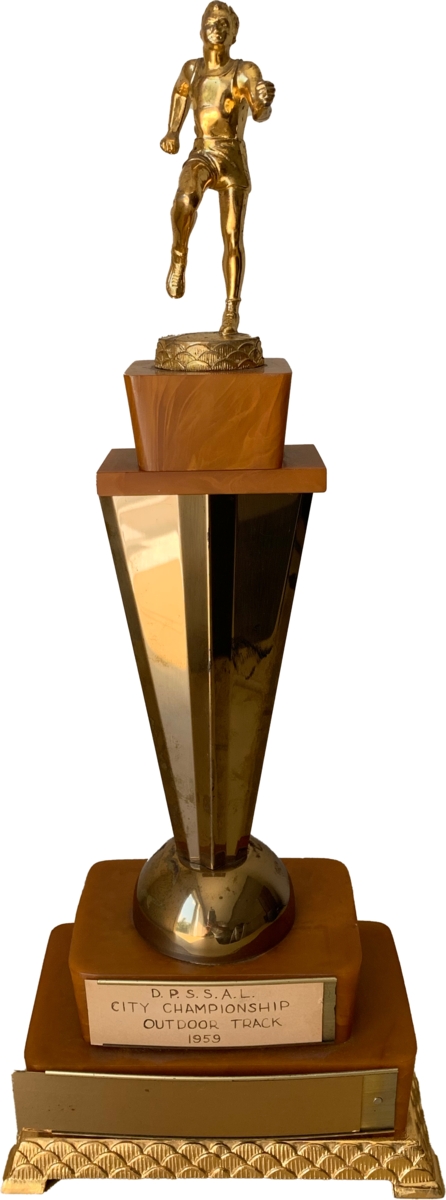
Mumford Memories - RESCUED


                                            Trophiy: Mumford Track - City Champions


*******************************************************************


Some Facts about our Website . . . We Communicate!!

  • We opened the site October 1, 2010  
  • We've enjoyed over 210890 classmate visits to our site since inception. Only classmates may use our site
  • We have never had a day without a classmate visit
  • We've exchanged thousands of in site messages and countless off site communications
  • Thank You !!

                     ************************************************************

Picture Section:

Scroll down the page:



Now Gone - Our Mumford remains a reflection within the New Building by: A Collens 

What does it look like Where you Live? 

Send pictures, we'll credit you and put them here:

Downtown Detroit & Riverwalk Images

by: Arnie Collens


Good any time of year: the wall at Buddy's Conant & 6 Mile, Detroit
Have a picture? Post in Class Chat: Talk and Share  What Summer looks like where you live.

*********************************************** 

 
Mumford High School Alumni Association
 
Mumford High School Alumni Association
 Updates-
 
 
Quick Links...    
Alumni Announcement Line
Join Our Mailing List


Visit our MUMFORD TODAY Photo Gallery to see images of the demolition on 7/24/2012 [Out with the Old] and some photos of the new building [In with the New].


___________________________      

Note: If you are a class member who has not yet joined the website, find your name in the list on the CLASSMATE PROFILES page in the left grey column, click it and register.


              Send Your Pictures to our PHOTO SECTION (<-- click to go to photos).


***********************************************

To update your PROFILE information, please click on CLASSMATE PROFILES, here or in the gray column to the left.  Then, find your name in the list of classmates, and click on your name.  During the update, you will have the opportunity to determine how much of your information you want available to the public [anyone who visits the site] and how much you want restricted to class members who are logged in.  Some thoughts with regards to . . .

Security

When adding your PROFILE information be sure to update the following fields:

1.  PROFILE VISIBILITY:   We URGE you to CHECK this box. Leaving this box unchecked will allow ALL persons (members and non-members) to see portions of your profile.  Checking this box will secure your data so that ONLY members can view this. 

2.  CONTACT DETAILS:  This box should be UNCHECKED if you do not want your address and phone numbers visible on this site.


Arnie Collens & Ben Craine of Blessed Memory
            Web design             


MISSING CLASSMATES


Know the email address of a missing Classmate? Click here to contact them!